
The automotive industry is rapidly shifting towards Service-Defined Vehicles (SDVs), transforming not only how vehicles operate but also how they are developed. This new paradigm demands closer collaboration between OEMs and suppliers to meet the increasing complexity of software-driven systems. SDVs represent a significant leap forward, with software now defining a vehicle’s key features, from safety and infotainment to autonomous driving. This shift is reshaping the global automotive landscape, creating a highly competitive market.
By 2035, the SDV market is expected to surpass $1 trillion, with demand driven by advanced technologies like ADAS, AI-powered platforms, and IoT integration. Recent success stories highlight this momentum:
- Mercedes-Benz introduced the Level 3 Drive Pilot, showcasing how SDVs can provide smarter, safer, and more adaptive driving experiences.
- Tesla, a pioneer in SDVs, continues to push boundaries with its over-the-air updates and AI-powered navigation.
How to leverage the OEM-suppliers collaboration
The development of SDVs requires seamless collaboration between OEMs and suppliers, bridging the gap between hardware and software expertise. Here are the key advantages of this approach:
- Cost Savings: Collaboration reduces redundancy and lowers development costs. OEMs can focus on core functions, while suppliers specialize in high-value components. For example, shared efforts in steering system calibration can cut expenses significantly.
- Faster Time-to-Market: By leveraging supplier expertise, OEMs can reduce development cycles. Flexible collaboration models allow tasks like motor calibration or system integration to be completed simultaneously by multiple teams.
- Enhanced Brand Loyalty: Collaborative innovation results in features that resonate with customers, strengthening brand loyalty. OEMs gain an edge by delivering tailored solutions faster than competitors.
- Up-to-Date Features: SDVs rely on frequent updates to stay ahead. Suppliers help maintain cutting-edge technology, ensuring vehicles are always in sync with user expectations.
Despite its benefits, we can’t forget some set of challenges which limits the potential of this collaboration:
- Technical Complexity: Integrating advanced systems like zonal controllers and chassis domain controllers requires in-depth domain knowledge. For example, steering systems involve high-frequency protocols, making seamless integration critical.
- Security Concerns: With increased connectivity comes heightened vulnerability. Ensuring robust cybersecurity measures is essential to protect SDV systems from potential threats.
- Regulatory Hurdles: Different regions have varying standards for safety, emissions, and data privacy. Aligning these regulations across global markets can be time-intensive and costly.
- Knowledge Gaps: The rapid pace of technological advancement demands continuous upskilling for both OEM and supplier teams.
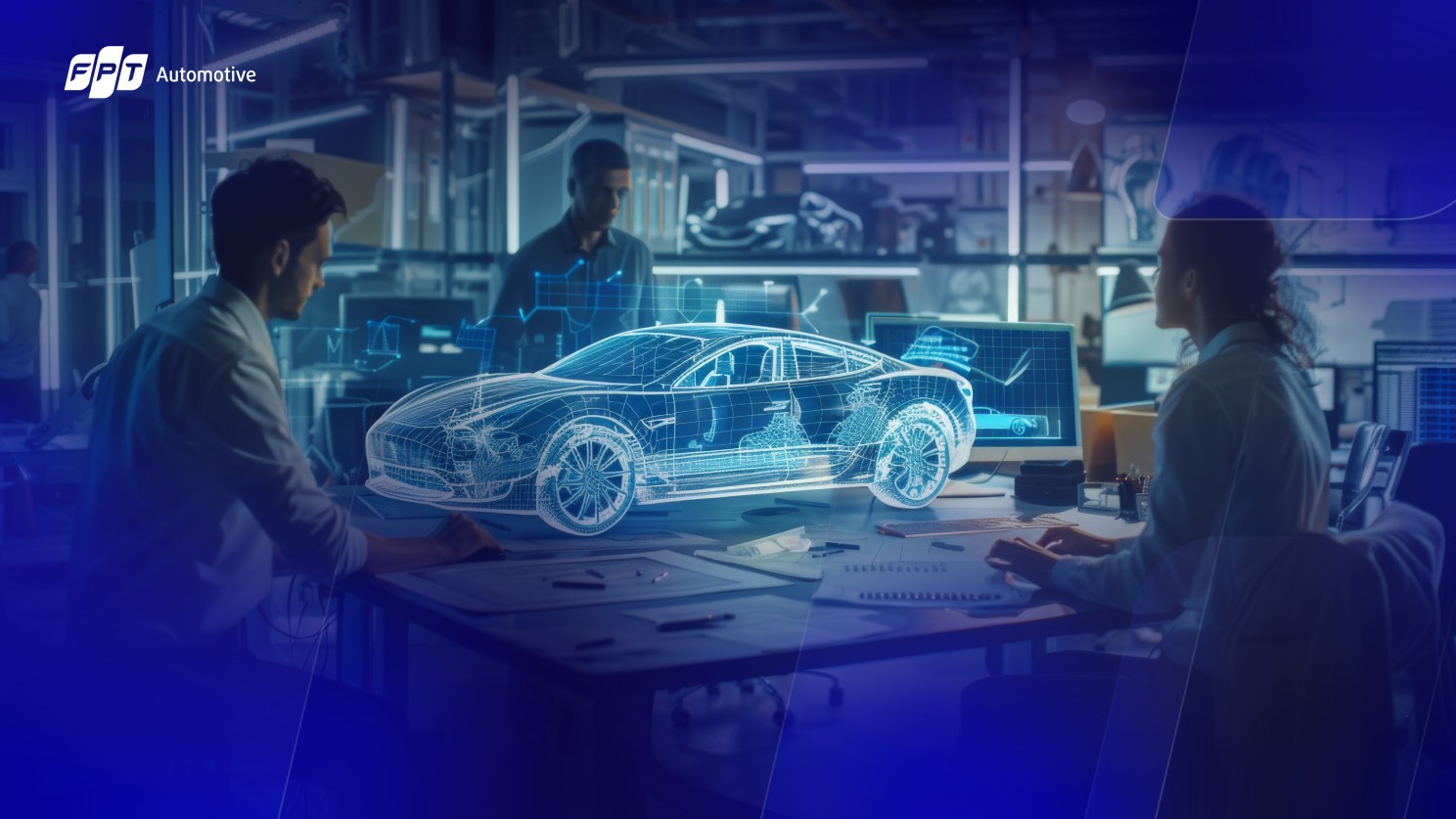
FPT Automotive: the very trusted partner for every OEM
At FPT Automotive, we are committed to empowering OEMs and suppliers through tailored solutions that address these challenges. With over 20 years of experience, 150+ global clients, and a presence in 35+ countries.
FPT Automotive empowers the future of mobility through cutting-edge solutions in green energy, autonomous driving, connectivity, and cybersecurity. For green energy, we optimize battery performance and energy management systems, extending electric vehicle range and supporting sustainable operations. In autonomous driving, our AI-driven solutions enhance precision and safety, offering advanced driver-assistance systems (ADAS) and seamless sensor integration to accelerate smarter, self-reliant vehicles. Through connectivity, we enable real-time diagnostics and IoT communication, ensuring smarter traffic management and seamless interaction with infrastructure and cloud systems. Meanwhile, robust cybersecurity solutions safeguard connected vehicles with encrypted data protocols, secure OTA updates, and advanced intrusion detection systems.
- Expertise in ADAS, AI, and cybersecurity.
- Advanced platforms like MaaZ for seamless software integration.
- Comprehensive support for green and autonomous vehicle development.
- Together, we are shaping the future of mobility—one innovative solution at a time.
The rise of SDVs signals a transformative era for the automotive industry. Collaboration between OEMs and suppliers is not just an advantage — it’s a necessity. At FPT Automotive, we’re proud to be at the forefront, offering the expertise and technology needed to navigate this exciting journey.
🚗 Let’s redefine the road ahead.
Source:
- Markets and Markets, 2024, Software Defined Vehicle Market by SDV Type (Semi-SDV. SDV), E/E Architecture (Distributed, Domain Centralised, Zonal Control), Vehicle Type (Passenger Car and Light Commercial Vehicle) and Region – Global Forecast to 2030.
- Mercedes-Benz Global, 2024, Certification for SAE Level 3 system for U.S. market.
- Deloitte, 2023, Surveying the road: Exploring the transition to softwaredefined vehicles in the automotive industry.
- McKinsey, 2023, Outlook on the automotive software and electronics market through 2030.
- Mercedes-Benz Global, 2023, Automated driving revolution U.S. availability of DRIVE PILOT.
- ETAS, 2023, Trends Towards Software-Defined Vehicles.
- Emergen Research, 2022, Software-Defined Vehicles Market Size (2024-2033).

 08-06-2026