


Say goodbye to old-school diagnostics and hello to the future of automotive care! Service-oriented vehicle diagnostics is here to supercharge your car’s health checkups. Imagine your vehicle as a smart, self-monitoring machine that knows what’s wrong before you do — detecting issues faster, fixing them smarter, and keeping you cruising smoothly on the road.
The epic evolution of E/E Architecture
Remember the good old days when cars were just a bunch of wires and boxes (a.k.a. ECUs) doing their own thing? Now, it’s all about integration and flexibility. Your ride isn’t just a car anymore — it’s a tech marvel on wheels, making sure every system talks, collaborates, and delivers the smoothest, safest driving experience ever.
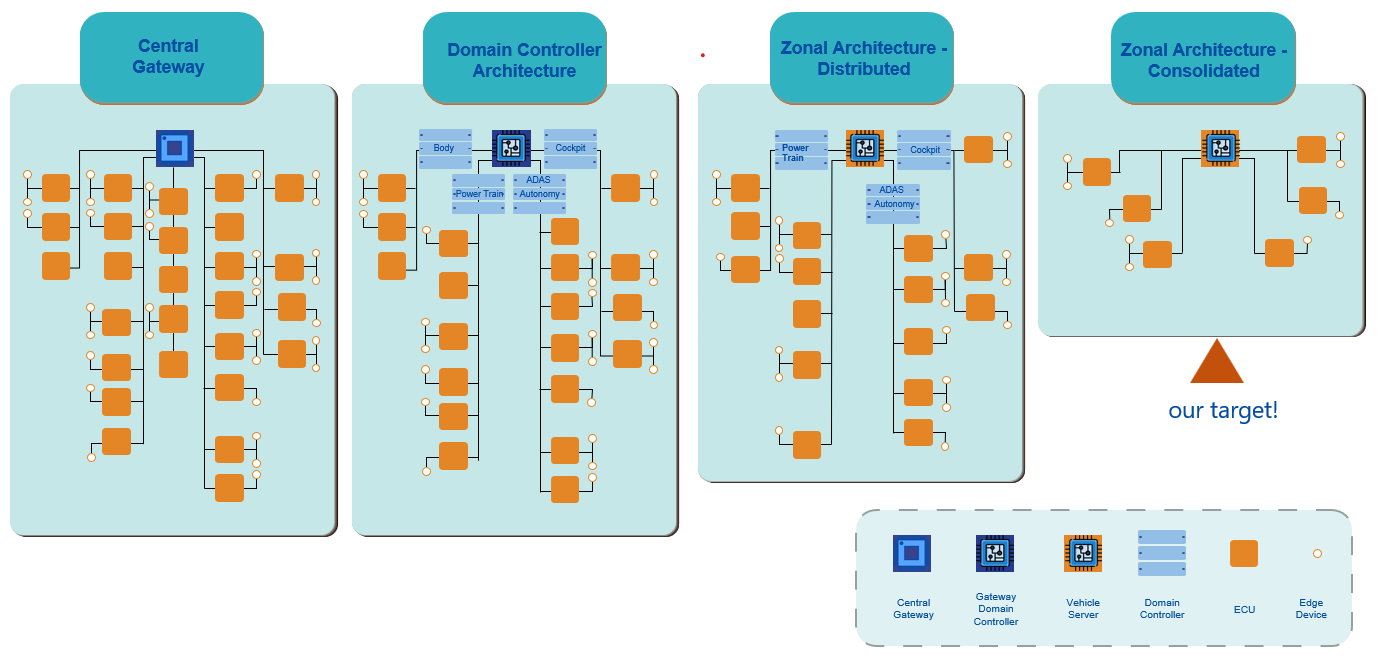
The journey can be traced through three significant stages. Initially, the distributed architecture stage featured multiple Electronic Control Units (ECUs). Then came the transition stage: ECUs began teaming up into functional domains like powertrain, body, and chassis, allowing for improved communication within domains and enhanced diagnostic capabilities. Today, we implement centralized and service-oriented architecture through High-Performance Computers (HPCs) that offer advanced diagnostics with real-time data analysis and fault prediction.
How can SOVD become a game-changer?
As vehicles evolve into complex, interconnected systems, traditional diagnostics just can’t keep up. Enter Service-Oriented Vehicle Diagnostics (SOVD) to tackle the challenges of modern automotive tech head-on. Here’s why it’s crucial:
1. Accuracy and Efficiency
Thanks to service-based architecture, SOVD centralizes and streamlines fault detection, making it faster and more accurate. Less time diagnosing, more time solving.
2. Scalability and Flexibility
As vehicles become more complex, with the integration of advanced technologies such as autonomous driving and connected vehicle features, diagnostics need to evolve. SOVD scales effortlessly, keeping pace with new innovations and complexities.
3. Real-Time Data Analysis and Predictive Maintenance
SOVD collects and analyzes data in real-time, spotting issues before they escalate. This real-time capability supports predictive maintenance strategies, allowing manufacturers and service providers to proactively address maintenance needs, thereby reducing downtime and improving vehicle reliability.
4. Performance and Safety
SOVD helps identify and address faults promptly, to ensure vehicles run at peak performance, reducing risks and enhancing safety for everyone on the road.
5. Interoperability and Standardization
Based on widely accepted standards like AUTOSAR and ASAM, SOVD ensures diagnostic processes are consistent and compatible across various platforms and manufacturers, simplifying the integration and deployment of diagnostic solutions.
6. Enhanced User Experience
For end-users, SOVD means quicker fixes, fewer breakdowns, and a more reliable ride. It’s all about boosting satisfaction and keeping you on the road. Additionally, the ability to predict and prevent problems enhances overall vehicle reliability and customer satisfaction.
Best Practices to implement Service-Oriented Diagnostics
To effectively implement service-oriented vehicle diagnostics based on AUTOSAR, automotive manufacturers should consider the following best practices:
1. Adopt a Modular Approach: Design diagnostic systems using modular components that can be easily updated or replaced as technology evolves.
2. Ensure Interoperability: Utilize ASAM standards and AUTOSAR guidelines to guarantee compatibility between different diagnostic tools and systems.
3. Leverage Real-Time Data: Implement real-time data analysis and fault prediction capabilities to enhance diagnostic accuracy and reduce downtime.
4. Focus on Cybersecurity: Protect diagnostic systems from cyber threats by incorporating robust security measures, such as encryption and access control.
5. Collaborate with Industry Partners: Engage with industry consortia, standards organizations, and technology providers to stay informed about the latest developments and best practices in service-oriented diagnostics.
Conclusion
Service-oriented vehicle diagnostics, powered by AUTOSAR, is a game-changer for the automotive industry. It boosts accuracy, efficiency, and flexibility, enabling manufacturers to stay ahead as vehicle systems evolve. By embracing this approach, the automotive industry can deliver safer, more reliable vehicles and drive forward with real-time data and seamless integration. The future of automotive diagnostics is here — setting the stage for ongoing innovation and progress.

 20-11-2024


