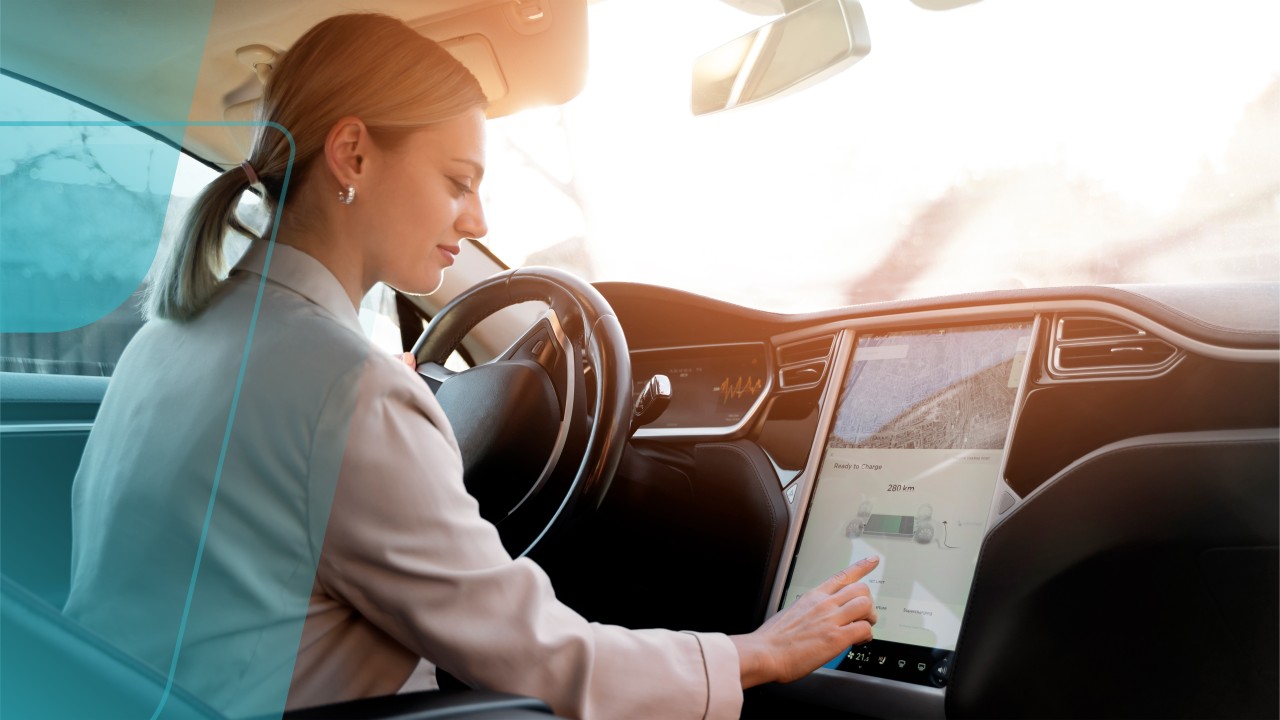
The Latest Buzz in Cockpit Domain Controllers
The Cockpit Domain Controller (CDC) is seeing a spike in demand with a number of factors, including user experience, several integrated functions, the rise of electric and autonomous vehicles, and lastly strict safety and regulatory criteria.
The automotive industry is going to undergo an unprecedented transformation thanks to AI-powered CDC, which will eventually benefit OEMs and consumers by increasing safety and the driving experience.
The Unprecedented Intervention of AI
Here’s how Artificial Intelligence (AI) plays a pivotal role in driving the market trends for CDCs:
- Enhanced Processing Capabilities: AI helps real-time data processing and decision-making, crucial for functions like ADAS and autonomous driving.
- Predictive Maintenance and Diagnostics: AI-powered CDCs can predict potential vehicle issues, enhancing reliability and reducing maintenance costs.
- Personalized User Experience: AI analyzes user preferences and driving patterns to provide a customized in-car experience.
- Voice and Gesture Recognition: Voice and gesture recognition systems allow drivers to interact with their vehicles more naturally and safely.
What Technologies Power the CDCs?
More and more AI-powered technologies are included in CDCs. We can easily shortlist a few of them:
- Machine Learning (ML) Algorithms: Vast amounts of data are collected and analyzed from various sensors in the vehicle.
- Neural Networks: Neural networks help develop image recognition, speech processing, and decision-making in autonomous driving.
- Edge Computing: To reduce latency and ensure real-time processing, AI computations are performed on the edge, within the vehicle’s CDC, rather than relying on cloud-based processing.
- Sensor Fusion: AI-powered multiple sensors (cameras, LiDAR, radar) enhance the accuracy and reliability of the information.
The First Winners: OEMs
Original Equipment Manufacturers (OEMs) are the first winners of this evolution:
- Competitive Differentiation: Cutting-edge AI-powered features are the most essential requirement for any OEM.
- Improved Safety and Compliance: OEMs ease to meet regulatory standards and reduce liability with the help of AI-powered vehicle safety.
- Cost Efficiency: Predictive maintenance and diagnostics can reduce warranty claims and maintenance costs.
- Scalability: CDCs offer a versatile platform that can be developed and updated over the vehicle’s lifecycle.
The Biggest Winners: Customers
Of course, customers are at the center of this AI-integrated CDC, with numerous benefits:
- Enhanced Safety: AI-driven ADAS feature and improve collision avoidance and lane-keeping assistance.
- Convenience and Comfort: CDCs now enable personalized settings and intuitive interfaces.
- Reduced Downtime: Predictive maintenance leads to the reduction of time spent in the shop, enhances services quality and avoids the need for new manufacturing.
- Futureproofing: Future technological advancements keep vehicles always up to date.
How should Companies Follow Up?
Companies can follow these suggested strategies to fully leverage the benefits of AI in CDCs:
- Invest in R&D: R&D is the most crucial stage for the development of AI.
- Collaborate with Tech Firms: Partnering with AI-tech firm helps provide cutting-edge solutions.
- Focus on Data Security: Cybersecurity consists of key features to protect sensitive data and maintain customer trust.
- Training: Workers need to practice and update regularly with the latest AI-evolution.

 30-11-2024